

Memberships: BACP (individual member) - UKCP (Trainee) - UKAGP - Friend of BAATN.
• Locations: Online UK-EU & London
• Language: English, Italian
Memberships: BACP, UKCP, UKAGP, Friend of BAATN.

I support people through periods of difficulty, change, or self-discovery, with a particular interest in neurodivergence, identity, living between cultures, and belonging, among other areas.
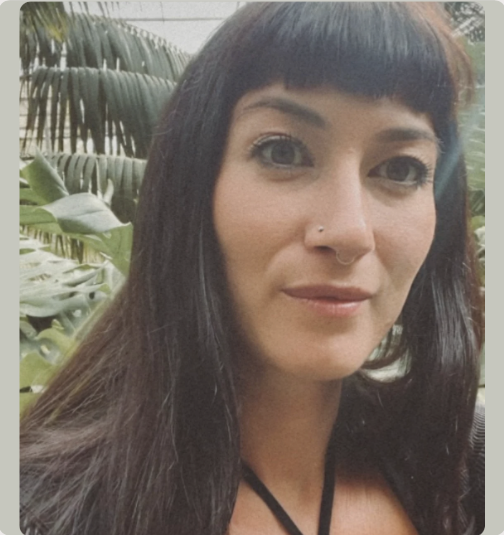
Hi, I’m Floriana (she/her), a qualified Gestalt Psychotherapeutic Counsellor and Art Therapist.

-
Anxiety, Shame, Loss, Low self-worth, Life changes, Women issues, LGBTQIA+ identities, Relationships, Feeling disconnected, Feeling broken, Impostor syndrome, Neurodivergence, Rejection sensitivity, Racism, Cultural issues, Feeling of non-belonging, Trauma & Intergenerational trauma.
You can find out more about myself and my work here.
If you’re thinking about starting therapy, you’re welcome to book a free consultation. It’s a chance for us to meet, ask any questions, and see whether working together feels like the right fit.
If my approach resonates with you but you’re unsure whether I can support you with what you’re experiencing, please don't hesitate to get in touch. I’d be happy to talk it through with you and discuss how I may be able to help.

About
-
My journey into therapy began at a time when I felt deeply lost and struggled to make sense of my pain. I felt broken, unable to imagine a hopeful future or a life that felt right for me.
Therapy became a place of nourishment when everything felt dry, where I was supported and challenged, and painful emotions could be acknowledged, held, and gradually integrated, rather than pushed aside.
Over time, I came to see that I wasn't fixed, but always changing, shaped by my relationships, the environments I was part of, and the meaning I made of my experiences.
The impact therapy had on my life led me to train as a therapist. Today, I feel grateful to offer others the kind of space that meant so much to me, and I value being alongside people as they find their own way.
This has been a twenty-year journey of personal and group therapy, learning and practice, grounded in Art Therapy, Gestalt Counselling and Psychotherapy.
-
I hold a Diploma in Gestalt Psychotherapeutic Counselling, a Diploma in Art Therapy, and am currently completing an MSc in Gestalt Psychotherapy.
Alongside this, I am committed to ongoing professional development and continued learning, particularly in cultivating an anti-oppressive, trauma-informed, neurodivergent-aware, and queer-affirmative therapeutic practice.
My academic and professional background includes a Certificate in Humanistic Counselling Skills, an MA in Visual Anthropology, and a BA in Fine Art.
-
If life feels difficult to navigate, you may be feeling overwhelmed, stuck, anxious, disconnected, or unsure of where you belong. You may not always know why you feel this way, but you might sense that something needs attention. Together, we can explore your experiences and begin to understand what you need.
Over time, we all develop ways of responding to life that help us cope and find our place in the world. Sometimes, these responses can become familiar patterns that no longer feel supportive. In therapy, we can observe these patterns, understand their meaning, and explore new possibilities while recognising and valuing the parts of yourself that have helped you along the way.
I don’t believe therapy is about fixing something that is wrong with you or turning you into someone else. Instead, it can be a place where you reconnect with yourself, feel more grounded, and move towards a way of living that feels more aligned with who you are.
-
Together, we'll explore your relationships, your sense of self, and the ways you relate to others and the world around you. We may consider how these have been shaped by your past, the messages you've internalised, and patterns that have developed over time.
What feels "stuck" often shows up in the body before it can be put into words. By slowing down and paying attention to your body's responses, we can begin to understand these patterns differently, creating the possibility for more awareness and choice.
Our work may also include dreams and creative expression, to explore aspects of your experience that may be difficult to reach through words alone.
My practice is trauma-informed, anti-oppressive, neurodivergent-aware, and queer-affirmative. This means I work with care for your history, respect for your identity, and without judgement about who you are or how you experience the world.
I see therapy as a collaborative process. I do not assume I can fully understand your lived experience without your input, you are the expert of your life and your perspective is central to our work. Rather than working towards a fixed idea of wellbeing, we'll focus on what feels meaningful and right for you, we’ll start from where you are moving at a pace that feels comfortable.
My work is closely supported and supervised by other professionals, helping me ensure that our work meets a high standard and aligns with the ethical frameworks of UKCP and BACP.

Frequently Asked questions
-
Counselling and psychotherapy are very similar, and the terms are often used interchangeably. Generally, counselling focuses on a specific issue or challenge and may be shorter-term, while psychotherapy involves exploring deeper or longstanding patterns and is often longer-term. In practice, the approach is guided by your individual needs, and together we can decide what feels most helpful for you.
-
Finding the right therapist is one of the most important parts of starting therapy. Research shows that it's the relationship between you and your therapist that has the biggest impact on how helpful therapy feels, more than any particular type of therapy.
So take your time finding someone who feels right for you. You might want to have an initial conversation with a few different therapists before deciding who feels like the best fit.
Have a look around my website and see if my approach resonates with you. If you'd like, you're also welcome to book a free consultation. It's a chance to ask questions, get a feel for how I work, and most importantly, notice how you feel with me. Trust your instincts. Feeling safe enough and understood really matters.
-
Therapy can be short-term or longer-term, depending on your needs and what you hope to gain from the process.
Based on my clinical experience, I may offer a recommendation about a timeframe that I feel could be most helpful. However, this is something we will discuss together and review as our work progresses.
I will always communicate openly with you about my thoughts, reflections, and recommendations, so we can make decisions together about the best way forward. While I will offer guidance, the decision to begin, continue, or end therapy is always yours.
-
My fee is £70 for 50 minutes.
I believe that therapy should be accessible regardless of social or financial circumstances. To support this, I offer a limited number of low-cost spaces. If these are currently full, I can add you to a waiting list or help you explore alternative services. Feel free to get in touch, and we can look at this together.
All fees are reviewed annually.
-
I offer online therapy across the UK and the EU.
In-person therapy sessions from Central/East London.
-
From my experience, a flexible approach that combines both in-person and online sessions can be especially supportive. It allows for continuity when our bodies struggle or when life circumstances change, while also reflecting the different ways we connect and relate in everyday life.
Having lived with chronic period pain, PMDD, and hypersensitivity for much of my life, I understand how our bodies can shape our experiences and the ways we move through the world. This informs my practice by offering flexibility while also recognising the unique depth of connection, presence, and embodied experience that in-person sessions can bring to therapeutic work.
In our first session, we will discuss and agree on how we will work together, including whether we meet in person, online, or use a combination of both. This will form part of our therapeutic agreement and can be revisited as our work develops, ensuring the way we meet continues to support your needs.
-
Therapy doesn't begin and end in the therapy room. The therapeutic process continues between sessions, and consistency plays an important role in supporting our work.
When we choose to work together, I commit to supporting you throughout this journey, and I value the shared investment we each bring to the therapeutic relationship. Weekly sessions help build trust, strengthen our connection, and create the conditions for deeper therapeutic work.
My cancellation policy requires 48 hours' notice. Sessions cancelled with less than this notice are charged in full. Whenever possible, I will offer an alternative appointment within the same week.
-
The first session is an opportunity for us to get to know each other and begin exploring what brings you to therapy, what you would like to focus on, and what you hope to gain from the process. This initial conversation helps us develop a clearer picture of what you are looking for support with and how we might work together.
It is also a chance for you to get a sense of how I work, ask any questions you may have, and notice how you feel in our conversation. Besides, it gives me the opportunity to consider if I am the right person to support you and whether what you are looking for falls within my areas of experience and competence.
You don’t need to have everything figured out before we meet. We can take our time and begin wherever feels right for you.
-
Gestalt therapy is a relational and creative approach to psychotherapy that sees each person as a whole. It recognises the connection between the mind, body, emotions, relationships, and the wider environment, and how these different aspects of our experience influence one another.
While Gestalt therapy acknowledges the importance of the past, its focus is on what is happening in the present moment. By exploring thoughts, feelings, bodily sensations, and ways of relating, Gestalt therapy can help develop a deeper understanding of the self, discover new possibilities, and respond to life’s challenges with more choicefulness.
-
You are welcome to bring whatever feels important to you into therapy. No concern is too big or too small, and there is space for every part of your experience. Whether you're facing a specific challenge, feeling stuck, or simply wanting to better understand yourself or something you are experiencing, you are welcome to talk about anything that feels significant, difficult, or meaningful to you.
-
For me, wellbeing is our ability to live in a way that feels meaningful, connected, and sustainable. It is more than simply the absence of distress or illness. It is about navigating life's challenges, developing supportive relationships, and experiencing a sense of belonging, purpose, and agency.
I see wellbeing as shaped by both our inner world and the wider contexts in which we live. Personal history, identity, relationships, and culture all influence how wellbeing is experienced. At the same time, social systems can create inequalities in power, opportunity, and access that profoundly affect people's lives. This may include experiences related to race, gender, sexuality, migration, neurodivergence, disability, social class, body size, or work.
Therapy can offer a space to make sense of distress, deepen self-awareness, and explore new ways of responding to life’s challenges. It can support people in recognising the choices and resources available to them, while also acknowledging that some struggles are shaped by wider social, cultural, and systemic factors. Recognising this can help place personal struggles within a broader understanding of human experience, offering a more contextualised understanding of distress while highlighting the importance of support, community, and collective resources in sustaining wellbeing.
-
Life thrives where different worlds meet and flow together. In nature, forest edges, rivers flowing into the sea, and mycelial networks beneath the earth show us how different parts can connect and support one another, creating the conditions for life to flourish.
Like ecosystems, we are also shaped through connection. Our experiences, relationships, identities, communities, and environments all influence the way we understand ourselves and move through the world.
Hybrid reflects the coming together of different parts, perspectives, and ways of being. Flows speaks to movements, immersion, presence, connections, and being attuned with a rhythm that feels right for us.

how to book
-
The free consultation is an opportunity for us to briefly explore what brings you to therapy and what you are hoping to find support with. It offers a space for you to share a little about yourself, ask any questions you may have, and get a sense of my approach and the way I work.
This initial conversation also allows us to explore whether working together feels like the right fit, or whether another form of support or therapist may be better suited to your needs. If I feel that someone else may be able to offer more appropriate support, I may suggest a referral.
There is no obligation to continue after this consultation.
To book, please email me with a short description of yourself and your availability at: hybridflows.therapy@proton.me
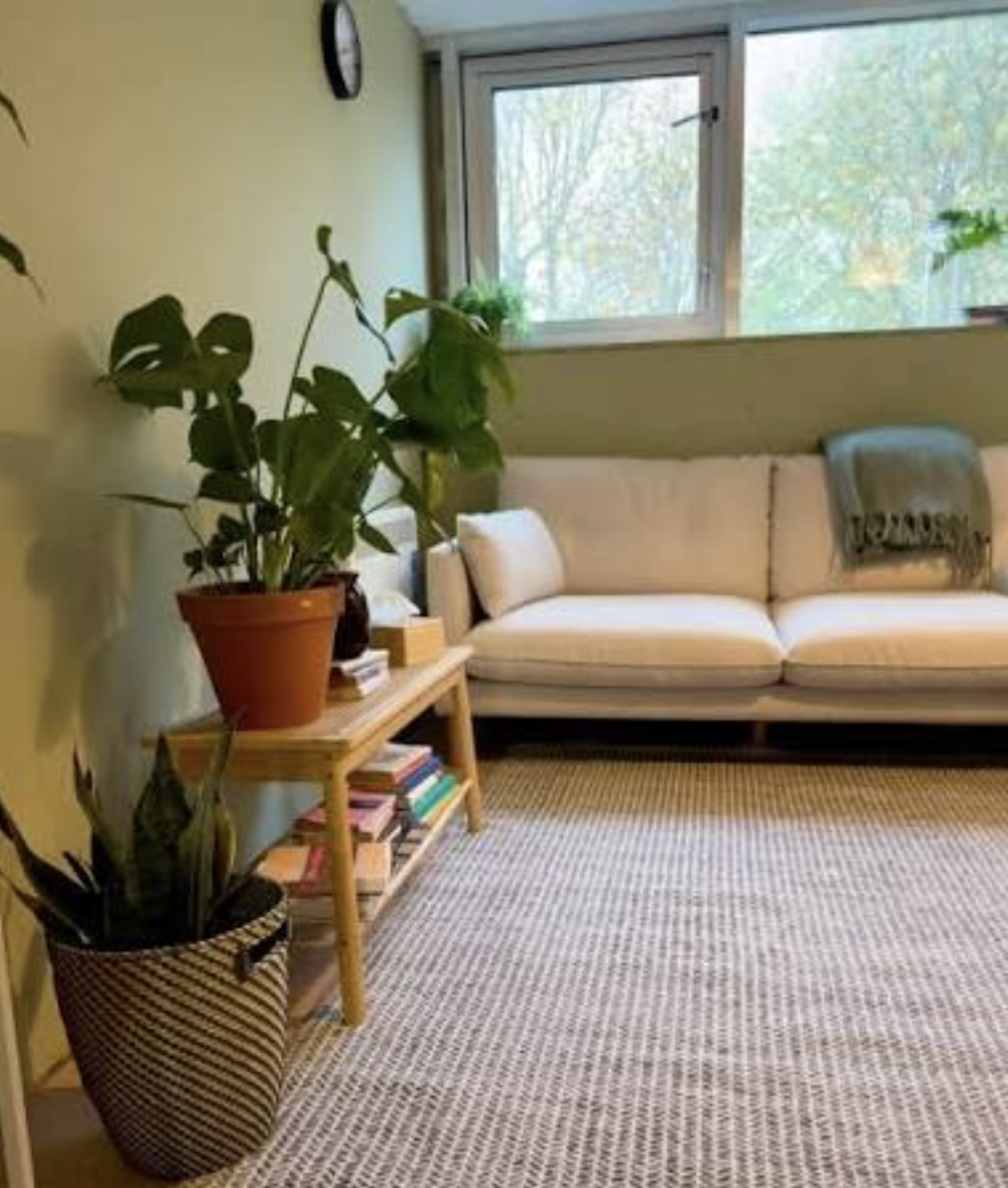
I have in person availability on Friday afternoons from October. Online availability Tuesday, Wednesday , Thursday.
-
The initial 50-minute therapy assessment is an opportunity for us to begin building a fuller understanding of you and your experiences. Together, we can start to explore your personal history, family background, relationships, and significant experiences, as well as what has brought you to therapy at this point in your life.
This gives you time to talk about what you have been experiencing, what may be affecting you currently, and what you would like support with. We can also explore what you hope to gain from therapy and begin to consider what might be helpful for you moving forward.
The assessment is also an opportunity for you to ask any questions about therapy or my approach, and for us to consider whether working together feels like the right fit. If I feel that another therapist, service, or form of support may be better suited to your needs, I will discuss this with you and may suggest an appropriate referral.
There is no obligation to continue with therapy after the assessment. If, following our initial session, we decide that continuing therapy together is not the right fit, the assessment will be charged at half the usual fee. This allows the session to remain a low-cost opportunity to explore your needs without any expectation or commitment to continue.
To book an assessment, please email me with a short description of yourself and your availability at:
hybridflows.therapy@proton.me

Get in touch
Email: hybridflows.therapy@proton.me
-
If you are in need of urgent support, please contact your GP, or call NHS 111 if your surgery is closed. If you are in immediate danger, or unable to keep yourself safe, call 999 immediately or go to your nearest A&E. You can also contact your local NHS Crisis Resolution Team for urgent mental health support.
Samaritans: 116 123. Free, confidential listening service. Available 24 hours a day, 365 days a year, for any reason, withou judgement.
Shout: Text SHOUT to 85258. Free, confidential 24/7 text-based crisis support. A good option if you are unable or unwilling to speak on the phone.
NHS: 111. Urgent medical and mental health support. Available 24 hours a day. Let the advisor know it is a mental health emergency.
Mind Infoline: 0300 123 3393. Information and support on mental health, services, and where to get help.
SANEline: 0300 304 7000. Emotional support and information for anyone affected by mental health problems.
PAPYRUS HOPELINE: Call 0300 102 2470 Text HOPE to 88247 Email: pat@papyrus-uk.org. 24/7 Support for ethnic minorities, racism, prejudice, discrimination, microaggressions and trauma. Confidential support for children, young people, and adults concerned about suicide.
Switchboard: 0800 0119 100. Free, confidential support for LGBTQIA+ people on any topic, including mental health, identity, and relationships. Open 10am–10pm daily.
Refuge – National Domestic Abuse Helpline: 0808 2000 247. Free, 24-hour confidential support for women experiencing domestic abuse. Refuge also offers BSL support and tech safety guidance for women and children affected by domestic violence.
Childline: 0800 1111. For children & young people.
Crisis support
-
If you are in need of urgent support in Portugal, please contact your GP (médico de família) or call SNS 24 on 808 24 24 24 for health advice. If you are in immediate danger or unable to keep yourself safe, call 112 for emergency services or go to the nearest A&E department (“Serviço de Urgência”). For urgent mental health support, you can access psychiatric services through hospitals with mental health units or specialist psychiatric hospitals in Lisbon, Porto and Coimbra.
The following services provide confidential emotional, psychological, social, and crisis support:
SNS 24 Psychological Support: Call 1411. Free 24/7 psychological counselling. sns24.gov.pt.
Voz de Apoio: Call 225 50 60 70. Emotional support by phone, chat, WhatsApp, email, and in person. 9pm–11:59pm. vozdeapoio.pt.
SOSCriança e Jovem: Call 116 111. Support for children, young people, and families. Available: Mo–Fri, 9am–7pm. Phone: (+351) 213 617 880. Email: iac-sede@iacrianca.pt. iacrianca.pt.
Domestic Violence Helpline: Call 800 202 148. Free support for victims of domestic violence. 24/7. Text support: 3060. cig.gov.pt.
Vozes Amigas de Esperança: Call 222 030 707. Emotional support for anxiety, depression, and suicidal thoughts. 4pm–10pm. voades.pt.
Telefone da Amizade: Call 22 832 35 35. Confidential support during personal crises. 4pm–11pm. telefone-amizade.pt.
SOS Estudante: Call (+351) 915 246 060. Emotional support for students and others. 8pm–1am. sosestudante.pt.
SOS Voz Amiga: Call 213 544 545. Confidential emotional support. 3:30pm–12:30am. sosvozamiga.org.
APAV: Call 116 006. Support for victims of crime. Mon–Fri, 8am–11pm. apav.pt.
Linha 1414: Call 1414 – Emotional support, counselling, and information. Mon–Fri, 10am–6pm. icad.pt.
Quebrar o Silêncio: Call 910 846 589. Support for male survivors of sexual violence. Mon–Fri, 9:30am–5:30pm. quebrarosilencio.pt.
LGBTI+ Support Line: Call 969 239 229. Emotional support and guidance for LGBTQIA+ people. Thu–Fri, 8am–11pm. ilga-portugal.pt.
Social Emergency Line: Call 144. Emergency social support. 24/7. www2.gov.pt.
LGBTI Youth Victim Support: Call 96 008 11 11. Support for LGBTQIA+ young people affected by violence or discrimination. Mon–Fri, 10am–6pm. casa-qui.pt.